ServiceTitan Notion Integration
Sync ServiceTitan with Notion automatically - jobs, customers, and invoices always current, no coding needed
Free to start. No credit card required.
Trusted worldwide
500+ teams stopped copying data manually.
Yours can too.














The ServiceTitan Notion integration lets you pull live field service data directly out of your ServiceTitan account and into Notion using Note API Connector. Whether you are tracking work orders, keeping a customer directory, monitoring technician schedules, or reviewing invoices and payments, this integration keeps your Notion databases in sync with ServiceTitan automatically.
With Note API Connector you can sync ServiceTitan with Notion on a fully automated schedule without writing a single line of code. Connect your ServiceTitan API credentials, choose a Notion database, map the job, customer, and invoice fields visually, and your data flows into Notion on autopilot from that point forward.
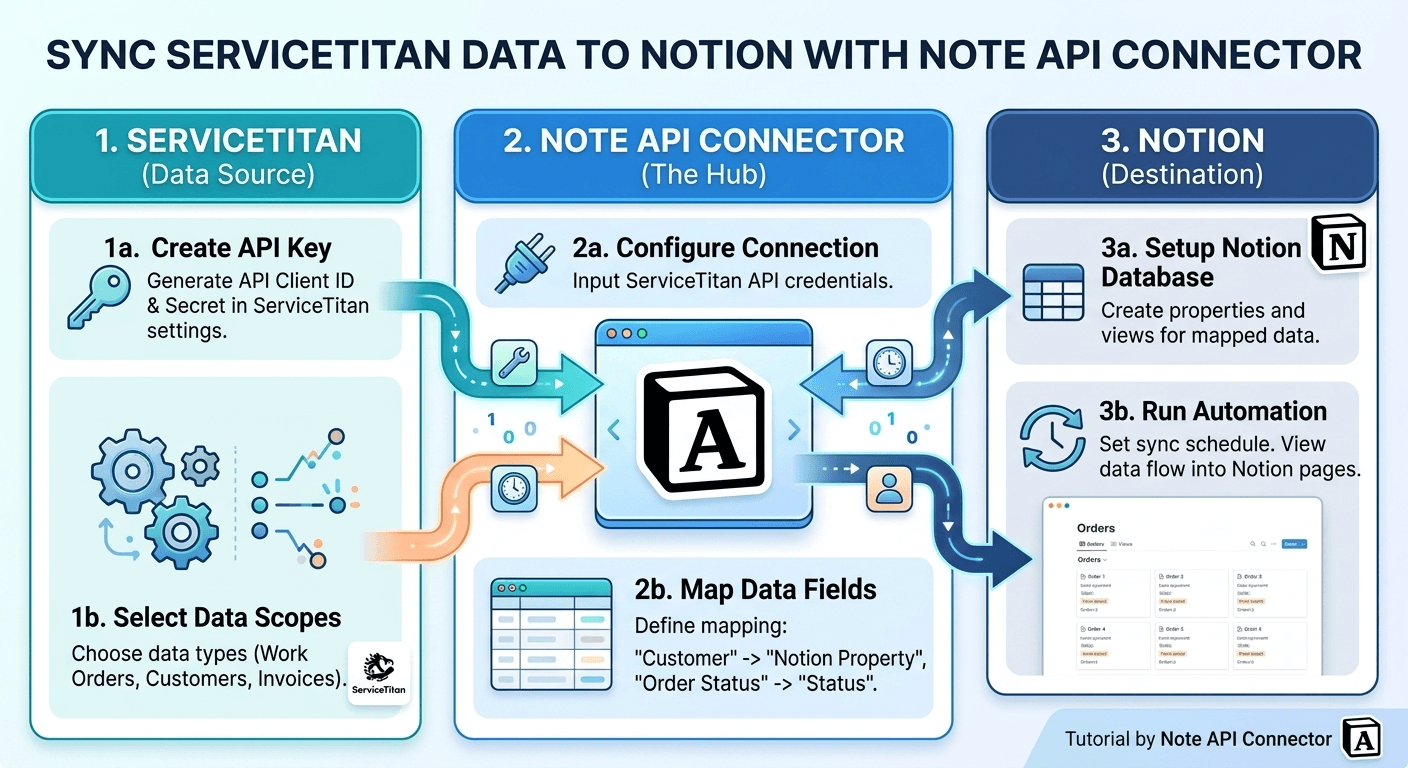
How to connect ServiceTitan to Notion
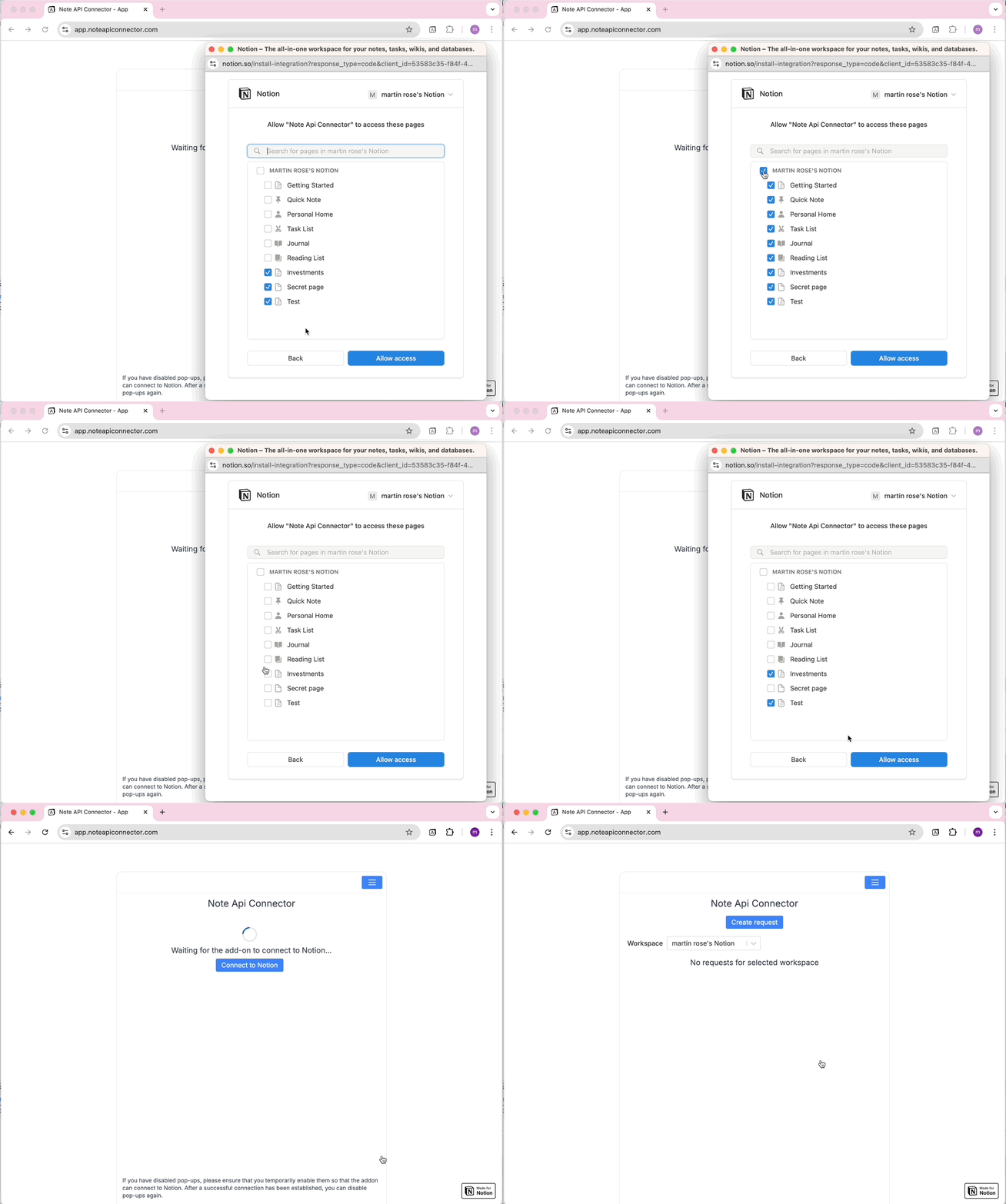
Connect your Notion workspace
Click Connect to Notion, authorize Note API Connector, and select the pages and workspace where your ServiceTitan data should appear.
Get your ServiceTitan API credentials and access token
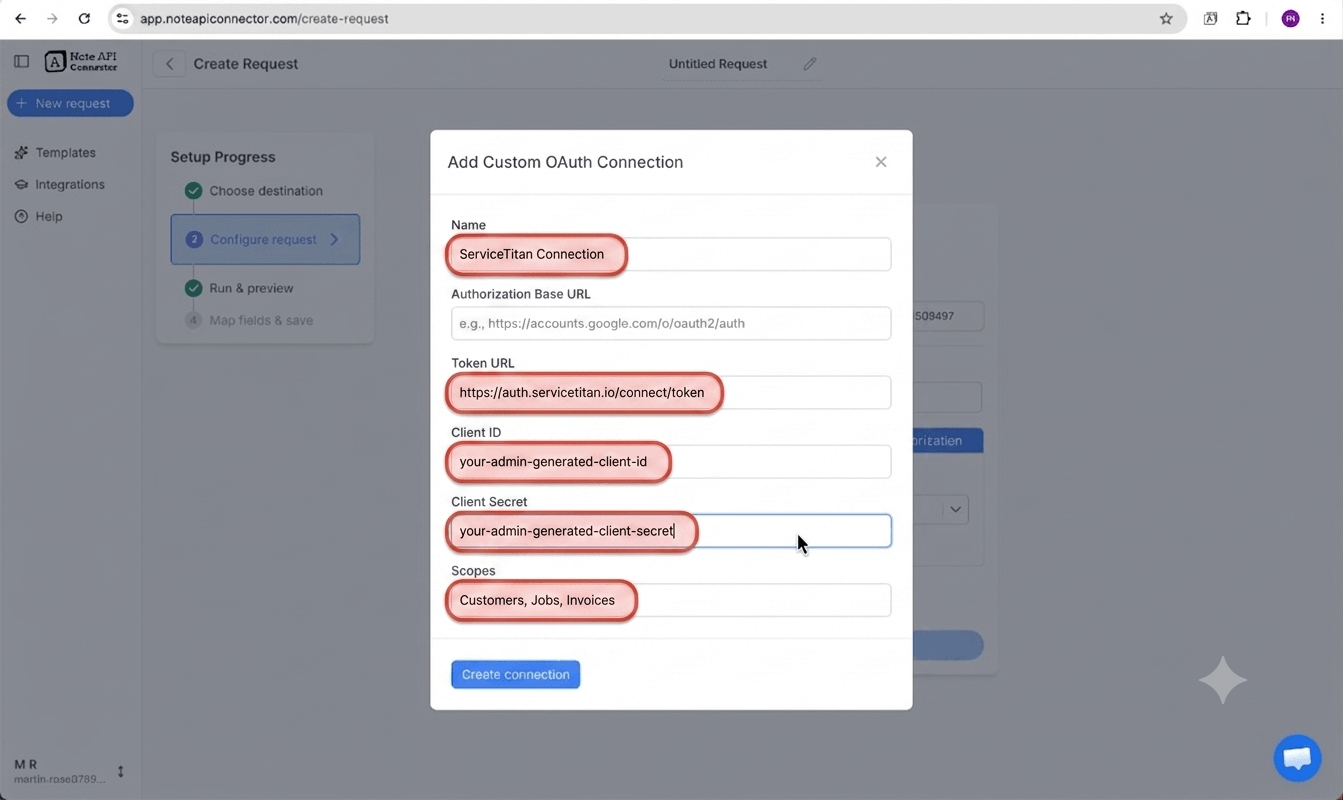
In the ServiceTitan Developer Portal, log in and create a new app under My Apps. Add your Tenant ID and choose the API scopes you need, for example Customers, Jobs, and Invoices with View access, then copy your Application Key from the Keys section. Ask a ServiceTitan admin to generate a Client ID and Client Secret for the app. In Note API Connector, create a one-time request with method POST to https://auth.servicetitan.io/connect/token, and in the Body tab add an x-www-form-urlencoded body with grant_type=client_credentials, client_id, and client_secret. Run it once and copy the access_token value from the response.
Create your data request with the access token
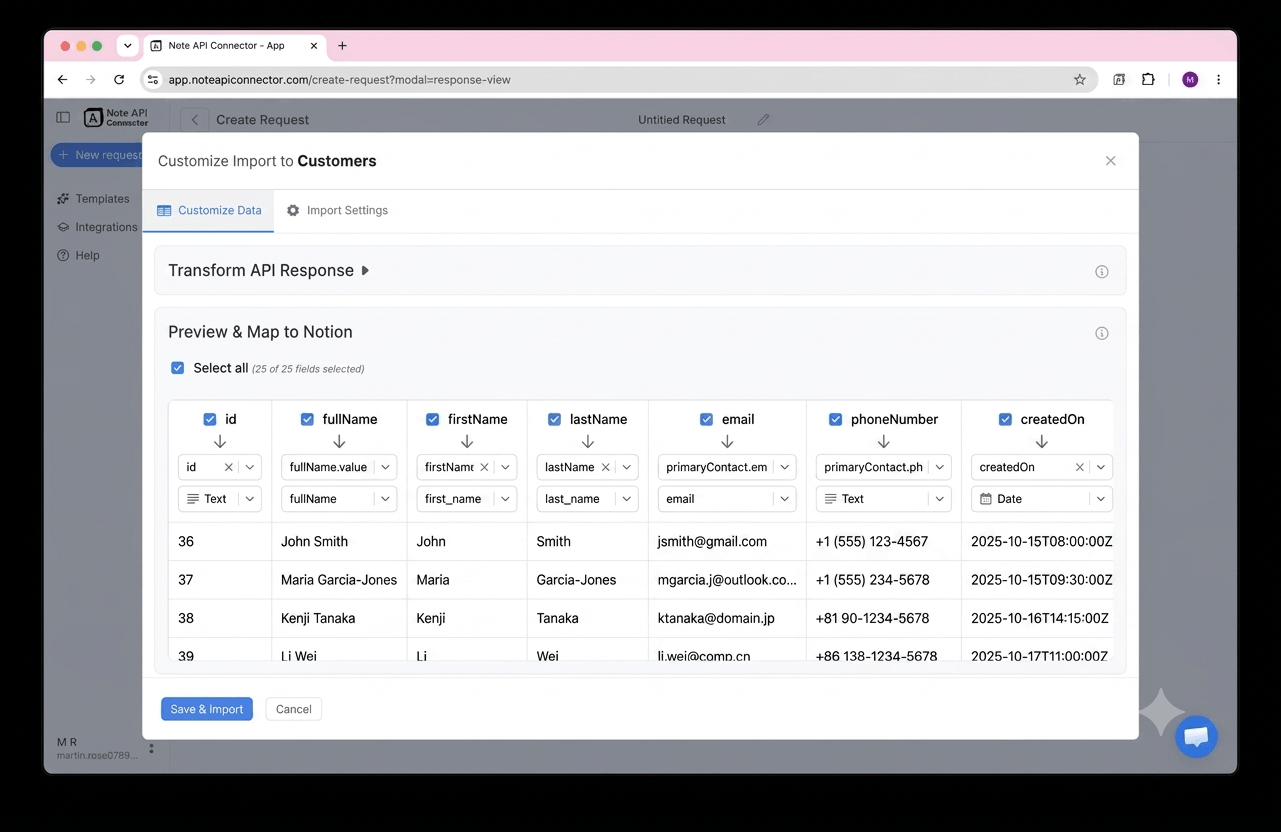
Click Create Request and paste your ServiceTitan endpoint URL, for example https://api.servicetitan.io/crm/v2/tenant/{tenant}/customers (replace {tenant} with your Tenant ID). Open the Authorization tab, select Bearer Token, and paste the access token you copied in the previous step. Then open the Headers tab and add a header named ST-App-Key with your Application Key as the value - ServiceTitan requires this on every call. Give the request a name and click Run. In the Response Field Mapping screen, select which fields to include and map each one to a Notion property.
Set your sync schedule and go live
Enable Auto Schedule and choose your refresh interval. ServiceTitan access tokens expire after 15 minutes and are not refreshed automatically, so if a scheduled run starts failing with an authorization error, repeat the token exchange in step 2 and update the Bearer Token on your saved request.
⏱ Hourly / Daily / Custom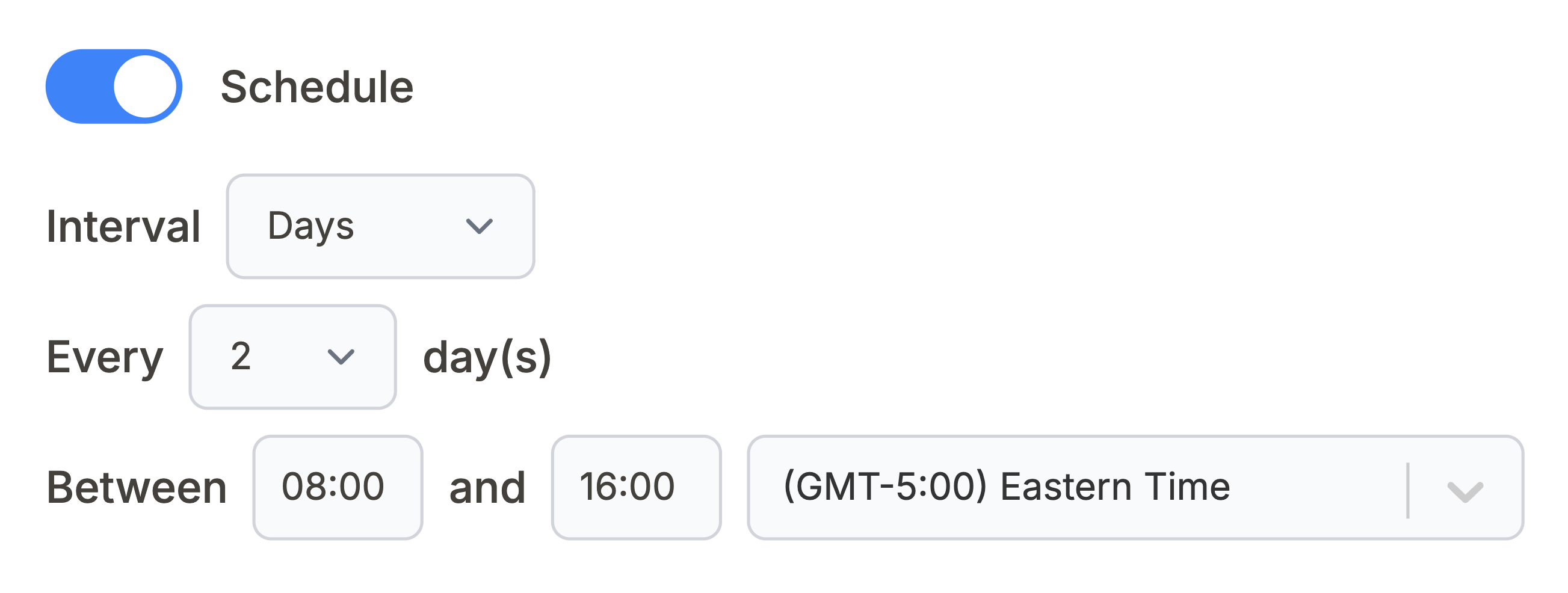
What ServiceTitan data can you sync with Notion?
Use these ServiceTitan API endpoints directly in Note API Connector. Each one can be mapped to a separate Notion database.
All jobs with job number, status, customer, job type, and scheduled dates. Build a live work order board or job status tracker inside Notion. Replace {tenant} with your Tenant ID.
https://api.servicetitan.io/jpm/v2/tenant/{tenant}/jobs
Customer records with name, contact details, customer type, and active status. Build a live customer directory or CRM view inside Notion.
https://api.servicetitan.io/crm/v2/tenant/{tenant}/customers
Scheduled appointments with start and end times, arrival windows, and assigned technicians. Build a dispatch calendar or daily schedule view inside Notion.
https://api.servicetitan.io/jpm/v2/tenant/{tenant}/appointments
Invoice records with total, balance, invoice date, and linked job. Build a billing tracker or revenue dashboard inside Notion.
https://api.servicetitan.io/accounting/v2/tenant/{tenant}/invoices
Service locations linked to customers with address, zone, and tax details. Cross-reference job sites or map service areas inside Notion.
https://api.servicetitan.io/crm/v2/tenant/{tenant}/locations
All technicians with name, email, business unit, and active status. Build a team directory or cross-reference technicians assigned to jobs in Notion.
https://api.servicetitan.io/settings/v2/tenant/{tenant}/technicians
See how it works
Why sync ServiceTitan with Notion?
Always up to date
Scheduled sync runs automatically. Your Notion database reflects live ServiceTitan data without any manual work.
No coding required
Point, click, and map fields. Connect ServiceTitan to Notion in minutes without any programming knowledge.
Custom schedule
Choose hourly, daily, or custom intervals. You control exactly when Notion pulls fresh data from ServiceTitan.
Conclusion
With Note API Connector, setting up a complete ServiceTitan Notion integration takes minutes, not days. Your jobs, customers, appointments, and invoices sync automatically into Notion on your chosen schedule, with no code and no manual copy-paste.
Whether you are building a live dispatch board, tracking work orders from open to completed, keeping an always-current customer directory, or giving your office team a read-only view of billing in Notion, connecting ServiceTitan to Notion gives you the flexibility of Notion's interface with the real-time accuracy of ServiceTitan's data.
Frequently Asked Questions
Yes. ServiceTitan provides a REST API that exposes customers, locations, jobs, appointments, invoices, and technicians, organized into namespaces such as CRM, JPM, Accounting, and Settings. Note API Connector connects to this API directly using an OAuth 2.0 access token to pull your ServiceTitan data into Notion on a scheduled basis.
In the ServiceTitan Developer Portal, create an app, select your Tenant and API scopes, and copy your Application Key. Have a ServiceTitan admin generate a Client ID and Client Secret. In Note API Connector, send a one-time POST request to https://auth.servicetitan.io/connect/token with grant_type=client_credentials, client_id, and client_secret in the body, then copy the access_token from the response. Create a second request, paste a ServiceTitan endpoint URL, select Bearer Token under Authorization and paste the access token, then add an ST-App-Key header with your Application Key. Select your Notion database, map the fields visually, and run the import.
ServiceTitan uses OAuth 2.0 with the client credentials grant type, which is a machine-to-machine flow with no login popup. You exchange a Client ID and Client Secret for a short-lived access token at the token endpoint, then send that token as a Bearer Token on every request. ServiceTitan also requires an ST-App-Key header containing your Application Key on every call, in addition to the access token.
Yes, with one caveat. Enable Auto Schedule in Note API Connector and choose your refresh interval. ServiceTitan access tokens expire after 15 minutes and ServiceTitan does not issue refresh tokens, so if a scheduled run fails with an authorization error, you need to repeat the token exchange step and update the Bearer Token on your saved request.
You can sync jobs, customers, appointments, invoices, locations, and technicians. Each ServiceTitan endpoint can be mapped to a separate Notion database, so you can build a full dispatch board, customer directory, and billing tracker all in one Notion workspace.
No. Note API Connector is a no-code tool. You paste your ServiceTitan API endpoint URL, enter your Bearer Token and ST-App-Key header, select your Notion database, and map fields visually using the response field mapping view. No programming knowledge is needed.
Yes. Note API Connector connects to ServiceTitan using a short-lived OAuth access token scoped to the API permissions you select in the Developer Portal. Note API Connector never writes or modifies any data in your ServiceTitan account.